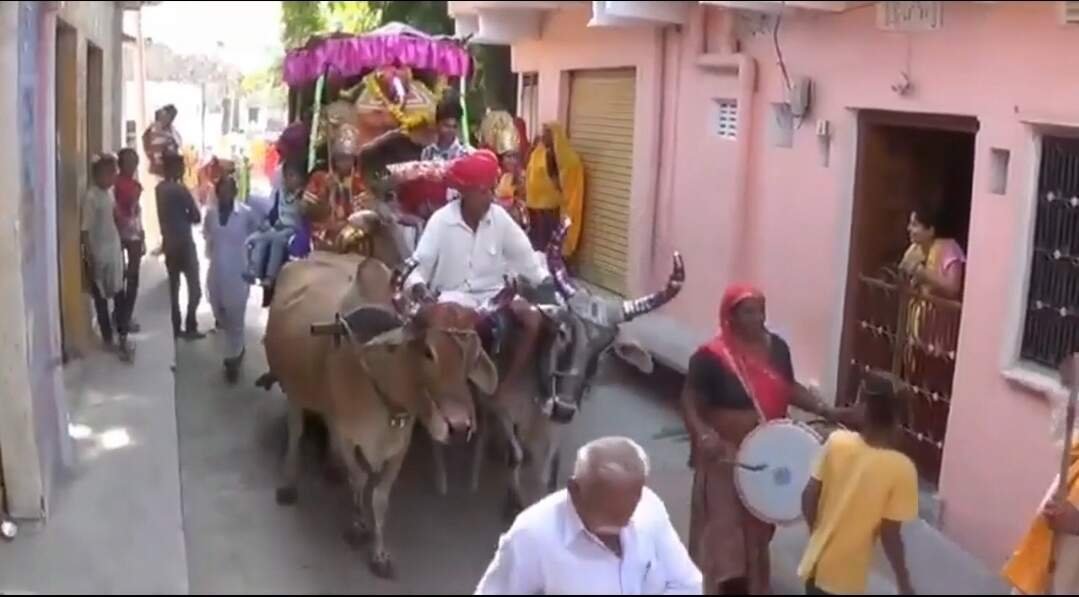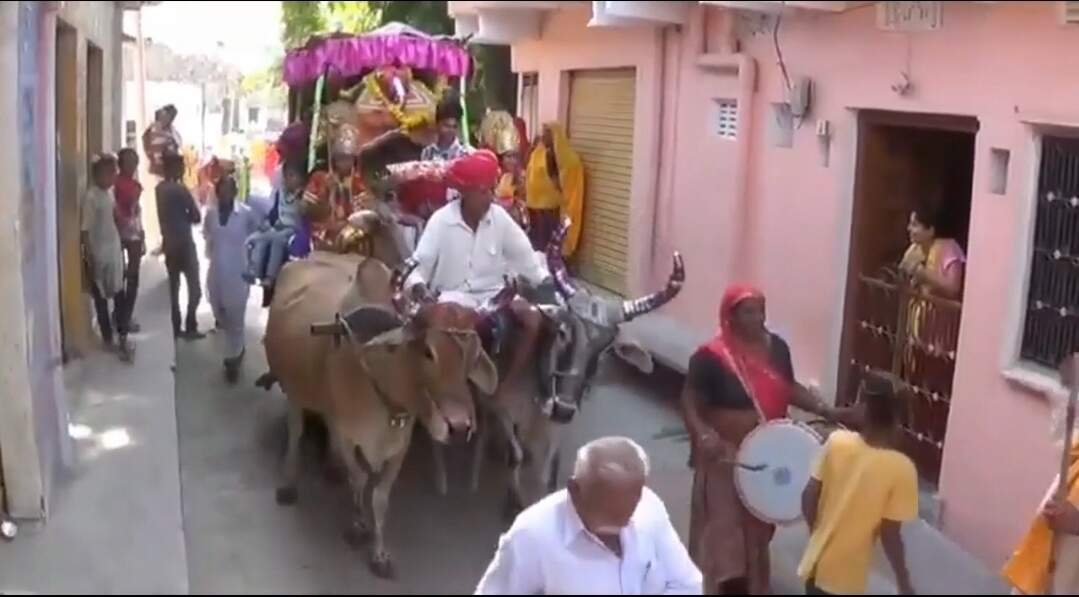
Bhilwara: Across India, Dussehra ends with flames—an effigy of Ravan set alight to mark the triumph of good over evil. But in Ropa village of Bhilwara’s Shahpura area, tradition takes a different turn. Here, it is not Ravan Dahan (burning) but Ravan Vadh (slaying).At the centre of the village stands a permanent, 10-foot-tall cement statue of Ravan. Built around 100 years ago, it was not meant to be destroyed. Instead, every year before Dussehra, villagers repaint it, preparing it for a ritual that has continued for about a century: the symbolic killing of Ravan, performed not with fire, but with a bow and arrow.On Dussehra day, the village gathers at Ravan Chowk as children and youth take up roles from the Ramayana. A child dressed as Ram enacts the final act—Ravan Vadh—while crowds from nearby villages arrive to witness what locals consider both a tradition and a statement. Over time, the distinctive observance has earned Ropa a nickname in surrounding areas: “Ravan ka Gaon.”The events unfold over two days. One day before Dussehra, the village hosts Lanka Dahan. A procession of Thakur Ji (Lord Vishnu) begins from Bhagwan Charbhuja Nath Mandir, after which bids are invited for volunteers to portray Ram and Lakshman. Child performers dressed as Hanuman then move towards Ravan Chowk for the Lanka Dahan enactment (the ritual took place Monday evening). The following day, Dussehra culminates with the youth dressed as Ram carrying out the symbolic slaying of Ravan with a bow and arrow.Pandit Satyanarayan Sharma explains the reasoning behind avoiding the usual burning. In Ropa village, he says, Ravan is regarded with unusual respect—viewed as a scholar rather than only a villain. That reverence is also tied to the permanence of the statue itself: the village does not reduce Ravan to ashes, but repeats a ritual “slaying” that keeps both memory and tradition intact.For residents, the site functions as more than a stage for an annual performance. Villagers speak of vows taken at Ravan’s statue when tasks remain unfinished, of prayers offered and offerings made, and of people coming from nearby areas seeking relief from hardship. The story most often repeated is of a year when drought gripped the region. Villagers say they held an all-night vigil at Ravan’s place—and by morning, heavy rain arrived. Since then, they say, faith in Ravan’s presence has only deepened.In Ropa, Dussehra still carries its familiar theme of victory and moral order—but it is expressed through a ritual shaped by local history, belief, and a tradition that refuses to end in fire.
In Raj’s Ropa village, Ravan isn’t burned on Dussehra—he’s slain | Jaipur News