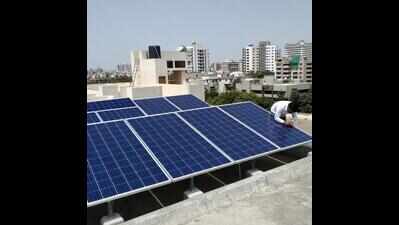
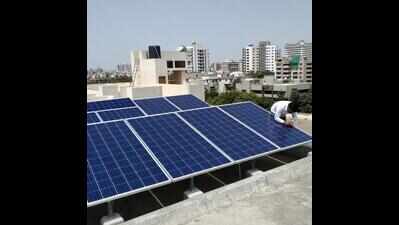
Jaipur: Govt subsidies for rooftop solar installations are losing their appeal as the cost of domestically manufactured solar panels has risen sharply, narrowing the price gap with imported alternatives.Industry stakeholders said that for projects above 5 kW, the subsidy is no longer relevant as cheaper imported solar panels provide a better cost proposition. They said Domestic Content Requirement (DCR) modules, which are mandatory for availing subsidies under the PM Surya Ghar Muft Bijli Yojana, have nearly doubled over the past year compared with imported panels.The increase has effectively offset the subsidy benefit of around Rs 25,000-30,000 of the Rs 95,000 both the central govt and state schemes offer for a typical 3-kW rooftop solar system.For 5-kW rooftop solar plants, households are increasingly opting for imported panels despite being ineligible for the subsidy capped at Rs 95,000. Industry representatives pointed out that the gains from cheaper imported modules outweigh the subsidy benefit, making subsidised DCR panels costlier in comparison.“The subsidy has largely lost its relevance for projects above 3 kW. Vendors are increasingly inclined towards imported modules,” said Puneet Goyal of the Rajasthan Solar Association.The Centre recently permitted the use of imported modules in rooftop solar projects, with conditions that such installations cannot claim subsidies. Industry players said the move acknowledges market realities, where rising domestic module prices have reduced the effectiveness of subsidies as a tool to drive adoption.Vendors highlighted the administrative burden associated with subsidy-linked projects. Consumers seeking subsidies must undergo documentation, inspection and approval procedures, whereas projects using imported panels can proceed without these requirements.Industry representatives believe that unless domestic module prices moderate, imported panels could become the preferred choice for a growing number of rooftop solar consumers, despite the absence of govt incentives.