Jaipur: Two fatal crashes that killed five people in two days on the Jaipur-Ajmer National Highway near Hotel Highway King and the 200-Feet Bypass have forced urgent intervention by police, the National Highways Authority of India (NHAI) and the district administration, exposing serious safety risks on one of Jaipur’s busiest highway stretches.
Police and NHAI fence crash-prone stretch on Jaipur-Ajmer highway
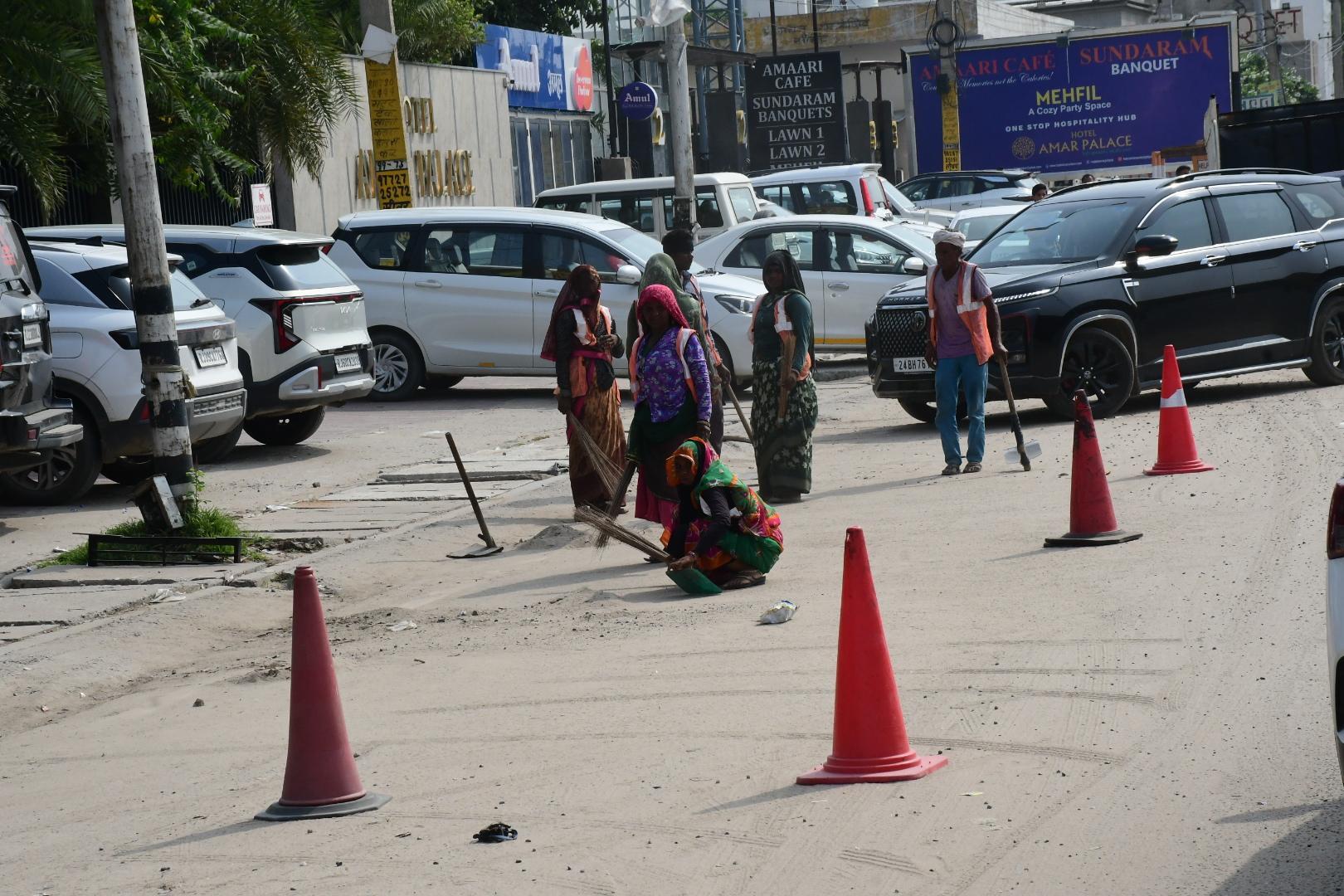
Police and NHAI fence crash-prone stretch on Jaipur-Ajmer highway
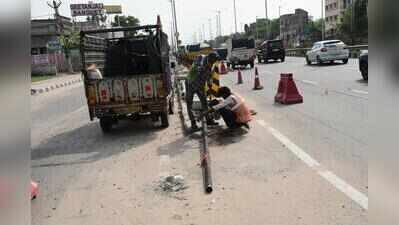
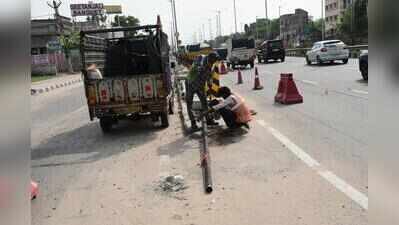
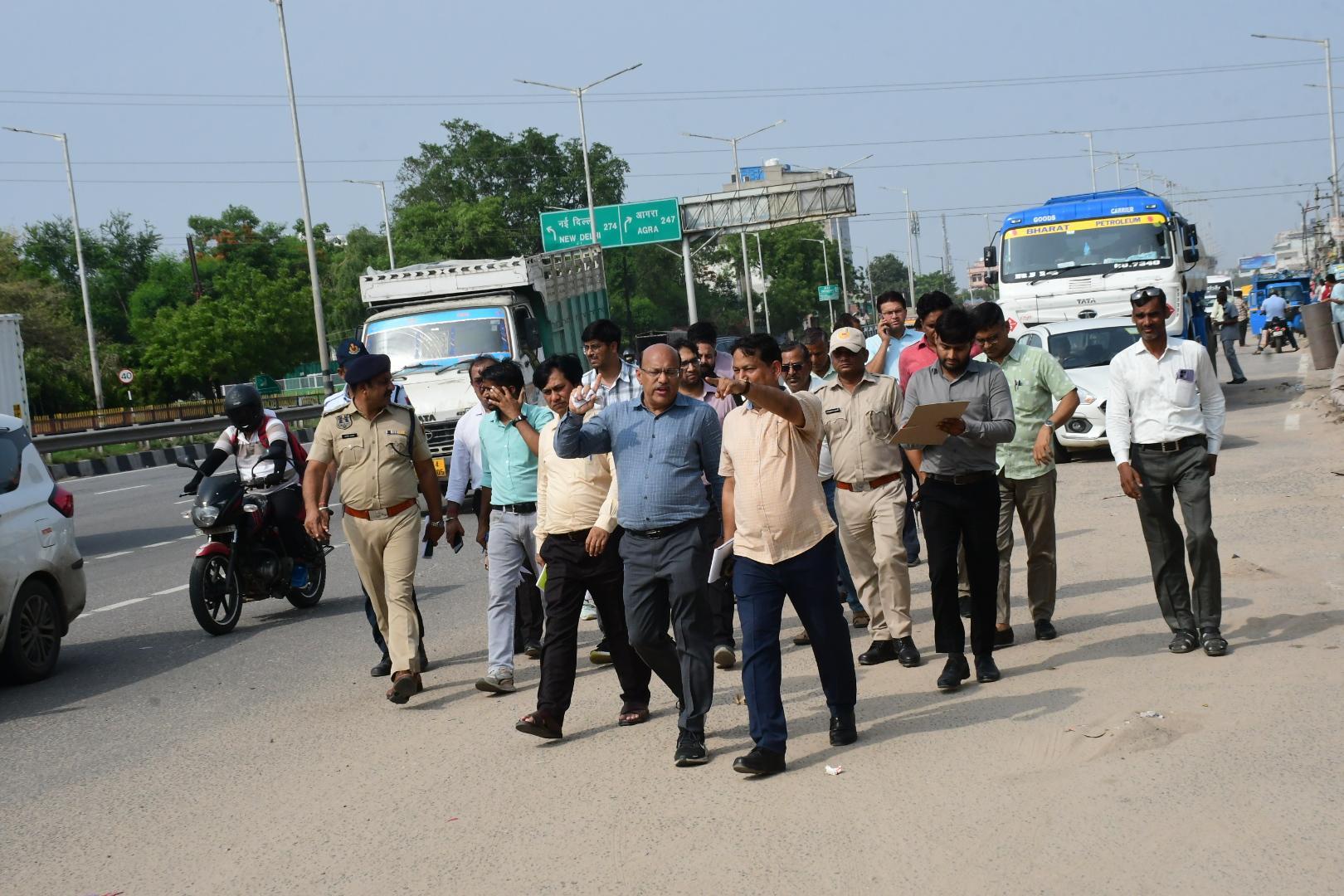
Authorities Thursday began fencing vulnerable sections to stop pedestrians from crossing the carriageway. Police also barricaded access near the Heerapura bus stand to prevent vehicles from moving directly towards the 200-Feet Bypass. Officials said these were temporary measures until permanent engineering solutions are finalised.Senior police officers and NHAI officials jointly inspected the accident site Thursday. Police said discussions focused on redesigning traffic movement so vehicles emerging from service roads and slip lanes can merge more safely with the main highway and reduce crash-prone conflict points.Speaking to TOI, DCP (Traffic) Yogesh Goyal said the area has seen a sharp rise in traffic from densely populated colonies in Kamla Nehru Nagar, much of it merging with vehicles moving between the 200-Feet Bypass and Ajmer Road.“One of the major challenges is managing the heavy traffic coming from interior residential areas along with vehicles moving towards Ajmer Road. During peak hours, this creates significant congestion. One of the important hurdles is ensuring a seamless transition of vehicles from the slip lanes onto the main carriageway,” Goyal said.Police officials said the two crashes cannot be automatically blamed on faulty road design. Preliminary findings point to overspeeding and negligence by heavy vehicle drivers. However, officials said the location’s layout makes it highly vulnerable to fatal crashes.The site brings together multiple traffic streams — a national highway, service roads, the 200-Feet Bypass, a bus stop, commercial establishments, an industrial belt and residential colonies. Traffic engineers describe such locations as “conflict zones”, where fast highway traffic mixes with slower local traffic, pedestrians and vehicles entering or exiting the highway.Officials said trailers and dumpers, which can weigh between 25 and 50 tonnes or more when loaded, need much longer stopping distances than passenger vehicles. At highway speeds, even a slight delay in spotting a slow vehicle or pedestrian can make a collision almost impossible to avoid.In both recent crashes, heavy vehicles hit slow-moving or stationary road users, underscoring the danger created by the speed difference between highway traffic and local road users.“The service roads are intended to separate local traffic from high-speed highway movement. However, where multiple access points, bus stops, commercial establishments and informal crossings exist in close proximity, that separation becomes blurred, with everyone using the same lane for different purposes,” an official said.The stretch near Hotel Highway King sees constant movement of vehicles entering and exiting the highway, commuters boarding buses, pedestrians trying to cross the road and traffic from nearby residential colonies. Traffic descending from the flyover at high speed adds to the risk. During peak hours, these movements overlap with fast-moving trucks on the highway.Police said such conditions raise the risk of rear-end collisions, side-impact crashes and pedestrian deaths unless access is controlled through engineering changes.“The authorities regularly conduct such audits to identify hazardous locations and recommend engineering improvements such as better channelisation, longer acceleration lanes, improved signage, pedestrian barriers, rumble strips, lighting and redesigned junctions,” an official said.Experts said the immediate causes, based on available facts, appear to be overspeeding, failure to maintain adequate stopping distance and the interaction of high-speed highway traffic with slower local vehicles.