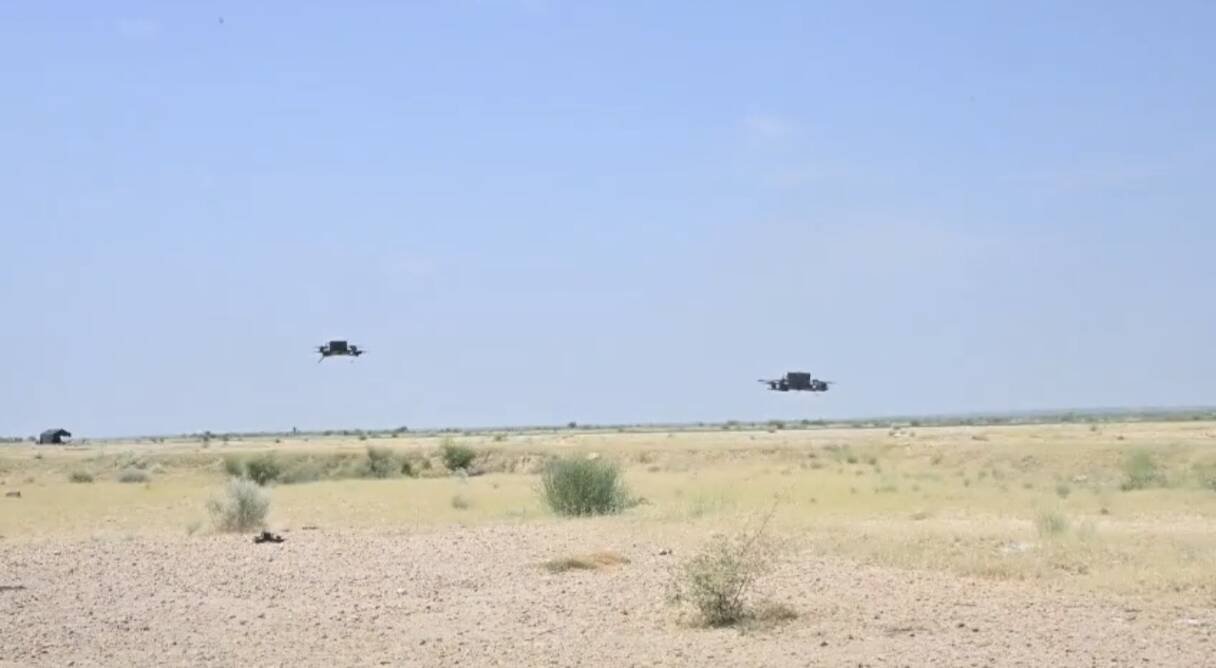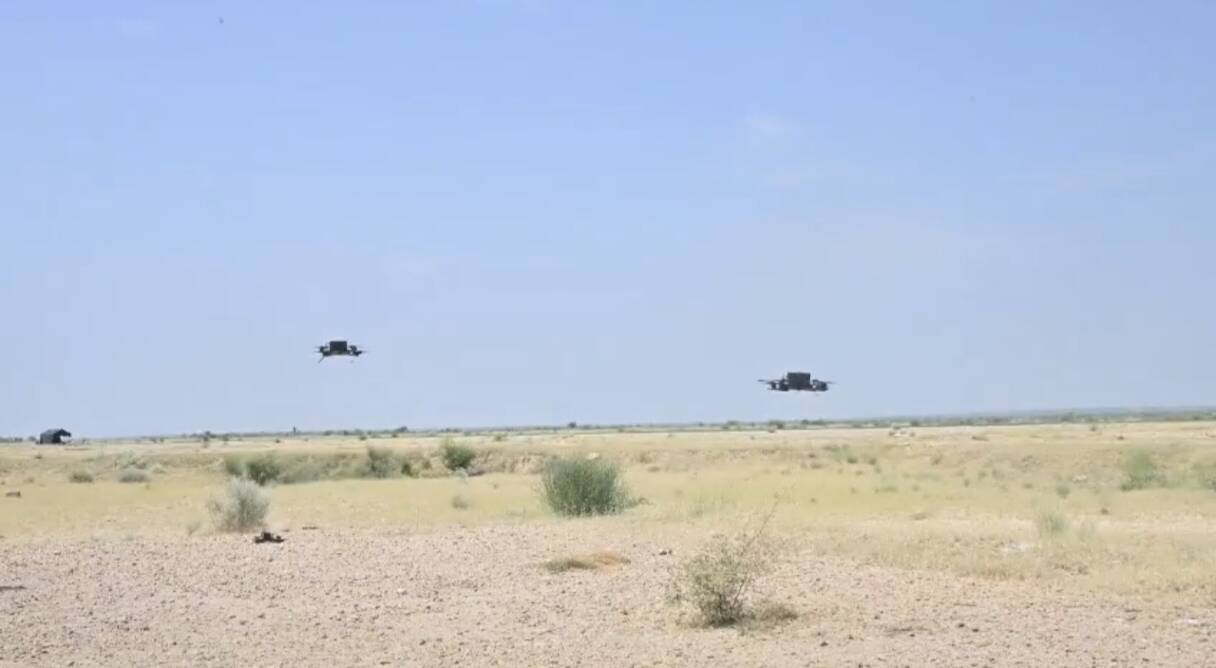
Jaisalmer: The Indian Air Force’s first ‘IAF Dronathon 2026’ concluded at Pokhran Field Firing Range Thursday, with more than 20 Indian start-ups, MSMEs, defence manufacturers and academic innovators showcasing unmanned and counter-drone technologies.The event focused on strengthening India’s defence technology ecosystem and assessing unmanned systems under operational conditions.For the first time in desert terrain, drones and anti-drone systems underwent live trials in conditions involving intense heat, blowing sand and strong winds. The systems were assessed in an environment designed to replicate battlefield conditions.On the opening day, IAF Vice Chief Air Marshal Ashutosh Dixit released the ‘IAF UAS Roadmap’, outlining the force’s future requirements in the unmanned domain. The roadmap is also aimed at providing Indian start-ups, scientists and defence innovators clarity on the technologies and capabilities required by IAF.The event featured demonstrations of unmanned aerial systems, autonomous and swarm technologies, electronic warfare systems and counter-unmanned aircraft systems (CUAS).Indigenous defence technology company IG Defence demonstrated its T-SHUL BEAM counter-UAS system. The man-portable, directional system is designed for soft-kill engagement of small UAVs, FPV drones and other unmanned platforms. According to the company, its multi-band radio-frequency architecture can interfere with command-and-control, telemetry, video transmission and GNSS signals.Another highlight was the demonstration of the indigenous ‘Vayu UTtaM’ multi-mode Unmanned Aircraft System Traffic Management (UTM) system. During live trials, the system demonstrated its ability to simultaneously detect and track military and civilian drones. It is aimed at managing increasingly congested airspace and identifying unauthorised or suspicious unmanned activity.The event also showcased autonomous operations, drone swarm technologies, electronic warfare and CUAS capabilities. Swarm technology involves multiple small drones communicating and operating collectively for coordinated missions.The Dronathon focused on assessing technologies for reliability, effectiveness and adaptability in demanding and contested environments.
IAF’s first Dronathon concludes with live drone, anti-drone trials at Pokhran | Jaipur News