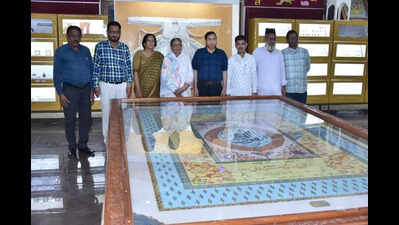
Jaipur: The Maulana Abul Kalam Azad Arabic–Persian Research Institute (APRI) in Tonk, home to one of India’s richest collections of Urdu, Arabic and Persian manuscripts, is facing a critical staffing and administrative crisis that scholars fear could severely disrupt research work. Only 8 of the 45 sanctioned posts at the institute are currently filled, and 4 more employees are due to retire soon, worsening the shortage. The institute houses nearly 25,000 rare manuscripts, many centuries old, but recruitment has stalled despite its importance to cultural preservation. The shortage has slowed cataloguing and digitisation projects, leaving visiting scholars — particularly those from abroad — struggling to access material. Established in 1978, APRI preserves manuscripts on religion, literature, science, history and law, many produced under royal patronage in Tonk. Former director, Solat Ali Khan, said, “Researchers from Iran, Turkey, Germany, France, Russia, the US and the UK visit APRI regularly and nearly 50 major research projects are completed here annually.” APRI’s collection grew out of the royal library of the Nawabs of Tonk, who, from around 1806 CE, gathered manuscripts from North India, Central Asia and the Middle East. Under their patronage, scribes copied rare works, repaired damaged texts and acquired important writings from scholars and courts. Over time, Tonk emerged as a recognised centre of Arabic–Persian learning, with many scholars donating their personal collections to the court.Khan added, “The golden days of the centre are fading — manuscripts were once copied and commissioned under royal patronage, some written in gold ink on special paper. Today, there is a shortage of trained staff and limited funds for conservation.”Scholars warn that the risk goes beyond administrative delays. “Some manuscripts in Tonk date back to the 13th century and originate from Central Asia. If climate control and restoration are neglected, papers will simply crumble over time. Once a manuscript of that age disintegrates, it is gone forever — no digital copy and no reconstruction can truly replace it,” said a senior conservation expert.The collection also served as a keeper of intellectual traditions. “The archive contains rare Sanskrit works copied in Benaras centuries ago. These texts connect classical Indian scholarship with Persian–Arabic learning. If they are lost due to insects, humidity or poor handling, we lose not just books; we lose evidence of our shared intellectual history,” a researcher said. Officials say recognition as a centrally-funded institution could help modernise infrastructure, accelerate digitisation and expand preservation efforts. Mufti Adil Nadvi, president of the Tonk Progressive Committee, said, “This institute is not just Tonk’s pride, it is a treasure for scholars across the world. The govt must act urgently, appoint a director and restore the institution.”Scholars and cultural groups have urged the state govt to fill vacancies, appoint a director and revive stalled academic projects, warning that years of irreplaceable research material could otherwise be lost.