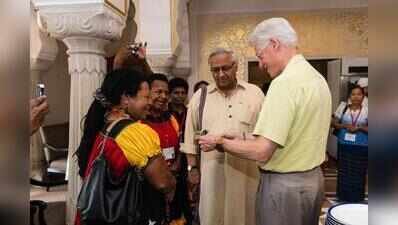
Few people outside Rajasthan would have heard of Tilonia before 1972. A small village in Ajmer district, surrounded by the harsh landscape of rural Rajasthan, faced many challenges familiar to villages across the region—water scarcity, limited access to electricity, inadequate healthcare, and few opportunities for children beyond conventional schooling.Today, the village has a very different identity. Women from remote communities in Africa, Asia, Latin America and the Pacific have travelled to Tilonia to learn how to bring electricity to their villages. Policymakers, researchers and international visitors have come here to understand a development model that challenges the conventional belief that technology and expertise belong only to formally educated professionals in cities.The story of this transformation began with Sanjit Bunker Roy, who came to Ajmer partly because his mother was principal of Mayo College. “His engagement with rural communities in the late 1960s brought him into contact with the district administration. During a meeting with the collector, he was offered an unused building in Tilonia, initially intended for training village sarpanches. It eventually became the base of the Social Work and Research Centre, later known as Barefoot College,” said Nosheen Khan of Barefoot College.The first challenge was water. Roy and local communities worked on digging wells and improving access to safe drinking water in villages across Ajmer, Jaipur, Nagaur and Tonk. “The work gradually expanded to healthcare, vaccination camps and tuberculosis awareness. For children who worked during the day, night schools offered an opportunity to study in the evenings. The model eventually spread to 22 states. Children’s parliaments gave young people, particularly girls, a voice in decision-making,” added Khan.The next challenge was electricity. After unsuccessful experiments with wind energy, Barefoot College turned to solar power in the early 1990s. The question was whether women with little or no formal education could be trained as solar engineers.The Solar Mamas programme, formally launched in 2000, was built around this idea. Women from remote communities came to Tilonia for six months of training in assembling, installing and maintaining solar systems. They also learnt stitching, water harvesting, conservation and basic health awareness, so they could take these skills back to their communities and train others.Jaswat Dadi of Barefoot College recalls a woman trained from Afghanistan’s Mazar-e-Sharif region telling the organisation that the solar lamps she had learnt to make were lighting her entire village. Women trained in Tilonia have also established centres in their countries to pass on these skills.Dadi estimates that the organisation’s work has reached well over 100,000 villages worldwide. Women from 96 countries have been part of its international network. Among those who visited Tilonia were then Prince Charles and Princess Diana, former President APJ Abdul Kalam and the Dalai Lama. Former US President Bill Clinton met Solar Mamas in Jaipur.
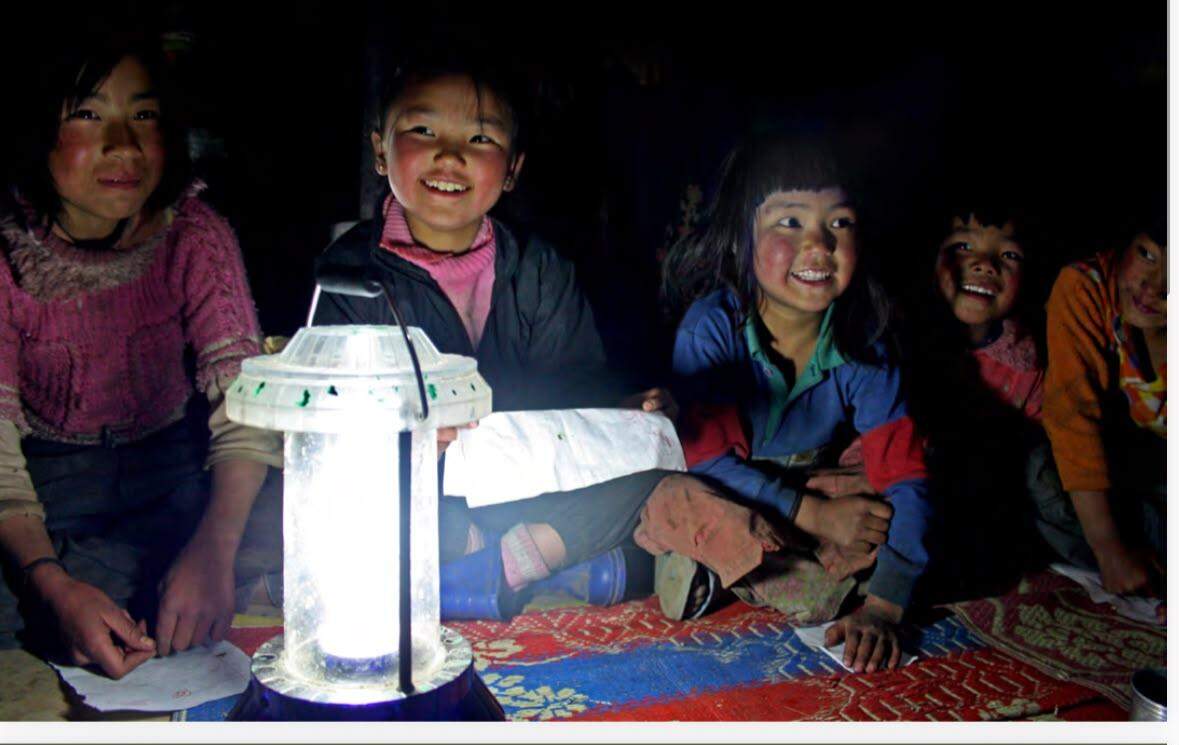
This is the Solar Mamas programme, launched by Sanjit Bunker Roy in 2000 with a simple idea: women with little or no formal education could become solar engineers if given practical training
For generations of Tilonia residents, Barefoot College became part of everyday life. Roy’s experiment began with an unused building and the problems of a few villages. Its reach eventually crossed national borders, but its central idea remained rooted in Tilonia: that rural people could become practitioners, not merely beneficiaries, of development.