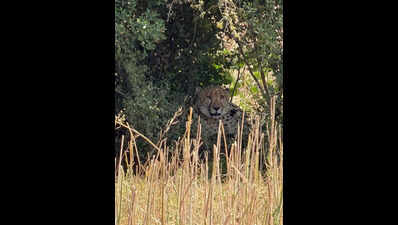
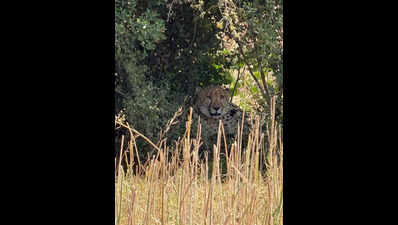
Jaipur: Two cheetahs from Kuno National Park are currently ranging in Rajasthan after the second big cat dispersed into Rajasthan’s Baran district from the neighbouring Kuno National Park in Madhya Pradesh, forest officials said in Jaipur Thursday.Officials said the male cheetah KP-3 recently entered the Ramgarh region of Baran and was moving about 3-km from the Ramgarh Crater. Its location was tracked through the GPS collar fitted on the animal.A forest official said, “Earlier, cheetah KP-2 dispersed into the same landscape and has been ranging in the Ramgarh area. With the arrival of KP-3, two cheetahs from Kuno are now present in the region.”Teams from the forest departments of Madhya Pradesh and Rajasthan are monitoring the movement of both big cats through satellite tracking, while field staff remained deployed on the ground. “Villagers in nearby settlements have been advised to avoid unnecessary movement in forest areas. This is the 5th instance of a cheetah dispersing from Kuno and reaching Baran district,” added the official.Though the Rajasthan region was proving to be favourable to these wild cats, a proposed memorandum of understanding (MoU) between Rajasthan and Madhya Pradesh for conducting a feasibility study on the free movement of cheetahs between Kuno National Park and the Kuno-Gandhi Sagar Cheetah Landscape was yet to be signed.“We obtained approval for the MoU from our govt. Madhya Pradesh also secured approval and shared the draft with us. Had it been signed, studies could have commenced, the Wildlife Institute of India could have been involved, and groundwork for developing cheetah grasslands and a coordinated strategy could have begun,” said a senior official source.The larger Kuno-Gandhi Sagar landscape spans nearly 17,000 sq km, including 10,500 sq km in MP and 6,500 sq km in Rajasthan. The draft MoU, a copy of which was with TOI, outlined broader objectives, including use of the cheetah as a flagship species for restoring open forests and savanna ecosystems, enhancing biodiversity, and strengthening ecological balance. It proposes that both states permit capture, recapture, or release of cheetahs in emergency situations, in accordance with Wildlife (Protection) Act, 1972, and protocols laid down by Union Ministry of Environment, Forest and Climate Change and National Tiger Conservation Authority.