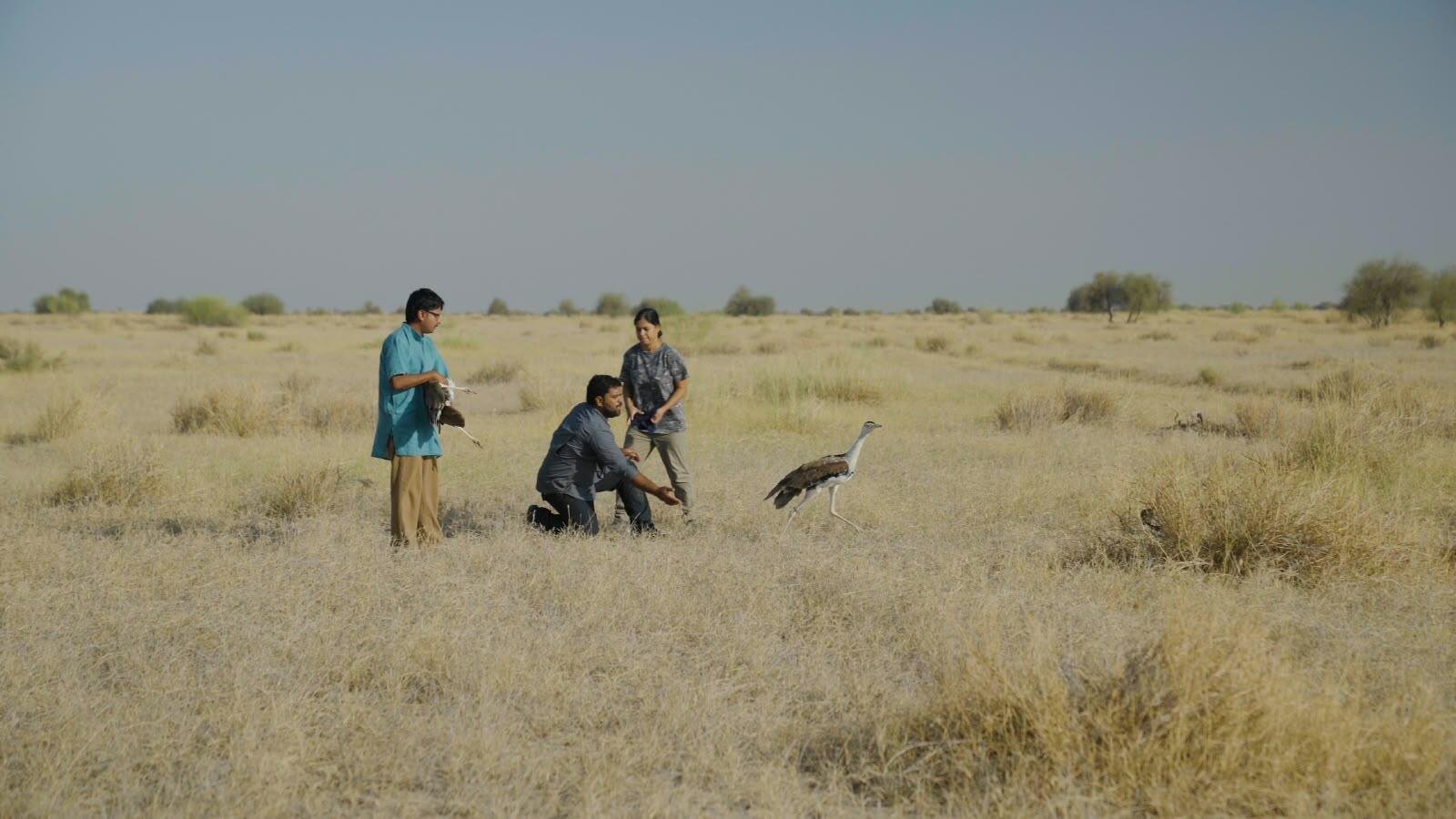
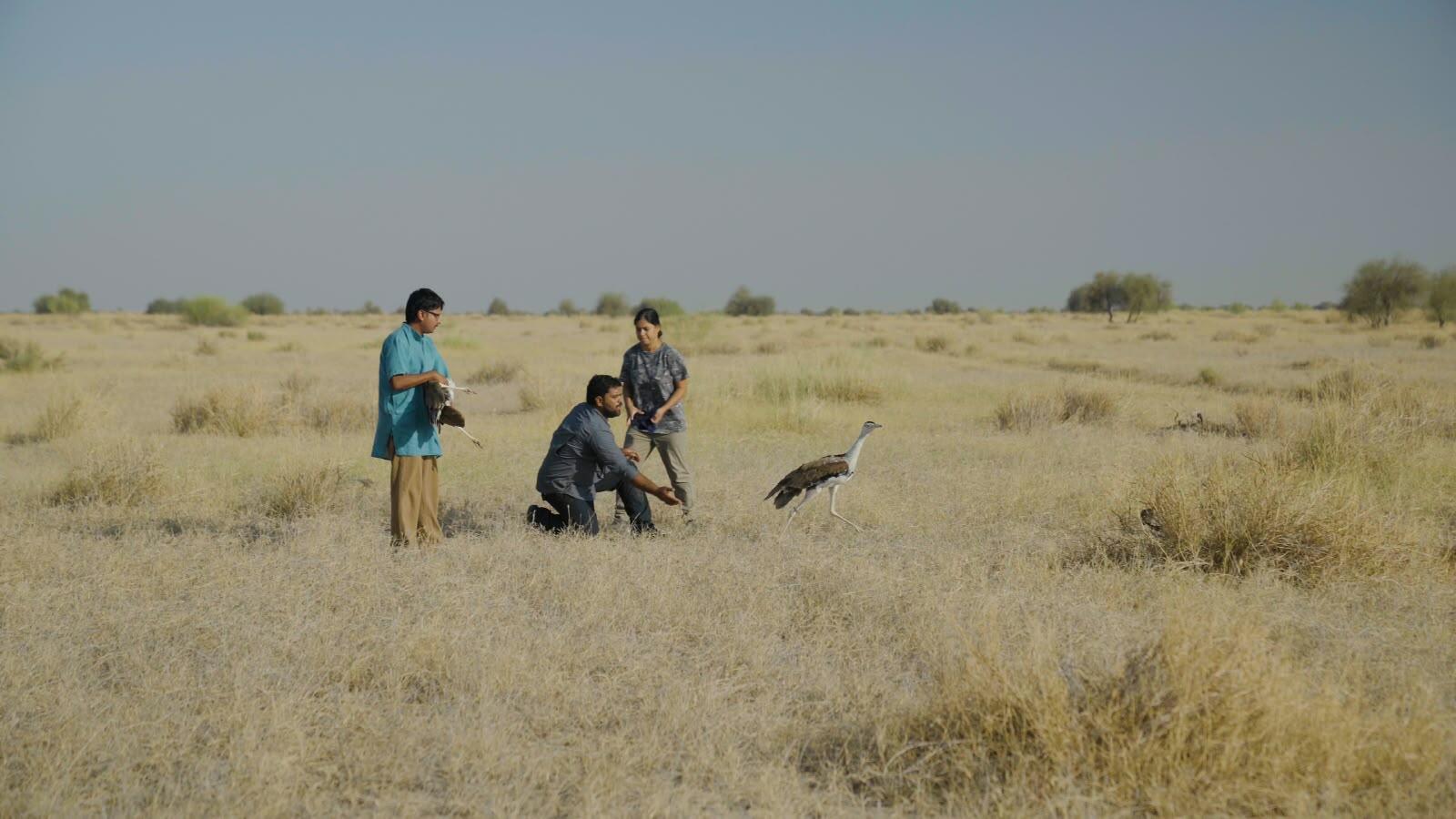
Jaisalmer: Two more captive-bred male Great Indian Bustards (GIB) were released into the wild in Jaisalmer Wednesday under a pilot project aimed at rebuilding the dwindling population of the species.With this, a total of four captive-bred GIBs have now been released into the wild with satellite tags to track their movements, while seven more are expected to be released soon. The latest release was carried out at a designated release site in the Desert National Park (DNP). Both releases have yielded encouraging results with all four birds reported to be safe and healthy.Union environment, forest and climate change minister Bhupender Yadav described the captive breeding and the subsequent release of the birds as a challenging but encouraging achievement under Project Bustard. “The first phase envisaged releasing 11 GIBs into the wild. Of these, four male birds have been released so far, and the remaining seven are expected to be released in the coming days.”He credited the progress to sustained efforts by scientists, conservation experts and the teams involved in the captive-breeding programme.He said, “The challenges involved in captive breeding and increasing the GIB population have been considerable, but the hard work of our scientists and teams is bearing fruit. We have now begun successfully releasing these birds into the wild.”Wildlife Institute of India (WII) director Govind Sagar Bharadwaj said the birds are moving within the DNP landscape and adapting to their natural surroundings. The six-month-old birds released earlier have spent more than a week in the wild. They are foraging for naturally available food, visiting water points and occasionally flocking with wild birds, indicating encouraging signs of adaptation and natural behaviour, he said.
Do you support the idea of using satellite tags to monitor the movements of released birds?
3k+ users shared opinion today
5k+ users already voted today
3k+ users shared opinion today
A joint team of WII scientists and forest department personnel is routinely monitoring their movements, habitat use and safety through advanced tracking equipment.The next phase of the pilot project is expected to be implemented shortly, with conservation teams preparing additional birds for release.The initiative marks an important step towards establishing a sustainable wild population of the critically endangered species, Rajasthan’s state bird, whose survival depends on intensive conservation efforts and the protection of its natural grassland habitat.