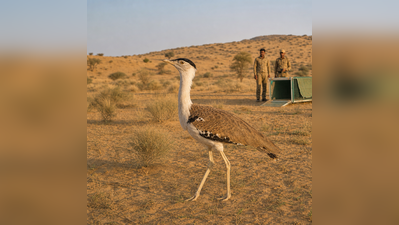
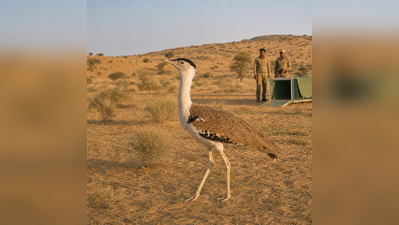
Jaipur: Rajasthan’s much-loved state bird, Great Indian Bustard, may soon take a decisive step back into the wild, with the forest department preparing to release a batch of captive-bred birds into the Thar desert during Wildlife Week next month.Locally known as Godawan — a name that has also inspired a popular eponymous whisky brand — the bird remains one of India’s most critically endangered species and the focus of one of the country’s most closely watched conservation programmes.The release, if the plan materialises, is likely to take place on Oct 4. Two sites in Jaisalmer district — Ramdevra and Sudashri — have been identified, though Ramdevra is currently seen as the more likely first release site. A final decision is yet to be taken and approvals are awaited.“We have 10 birds for release at the two centres. How many will be released in the wild will be decided after consultation,” a forest source said.The number of birds to be released will be decided by Wildlife Institute of India in line with its assessment and release protocol.Conservationist and former honorary wildlife warden Mal Singh Jamara, who has long advocated the release of captive-bred GIBs in the Thar, welcomed the move.“We thank the state govt for considering the release of the birds in the Thar first. This will be a major step for conservation and will also boost tourism and employment, as the rare bird could attract wildlife tourists from across the world,” Jamara said.The proposed release would mark a major shift in a programme that began as emergency insurance against extinction and is now entering its rewilding phase. Centre’s integrated GIB conservation project was initiated in 2016, while Rajasthan’s conservation-breeding programme became operational in 2019.A temporary facility was set up at Sam in Jaisalmer, followed by the larger conservation breeding centre at Ramdevra, which became functional in 2022. The first captive-bred GIB chick hatched in March 2023.The programme has since moved from building a captive population to preparing birds for eventual release into suitable habitats. The National CAMPA-funded programme records rewilding training and pilot release preparations in 2025, while Centre said in March this year that some captive-bred chicks would be soft-released into the wild as part of the project’s next phase.The proposed Thar release has gained significance after a plan to release GIBs bred at the Jaisalmer centres in Naliya, Gujarat, drew opposition from conservationists in Rajasthan. They argued that birds raised from eggs collected in Jaisalmer should first return to their natural habitat in the Thar.In a letter to chief minister, conservationists urged that any move to prioritise Naliya for the first release be reconsidered from a scientific and Rajasthan-centric perspective. They cited differences in population density, habitat conditions and renewable-energy infrastructure between Kachchh and Jaisalmer.“The new generation of GIBs should first be reintroduced in their natural habitat. If the population grows sufficiently, additional birds can later be released in Naliya and other suitable habitats on scientific grounds,” a conservationist said.The argument also comes against the backdrop of a Dec 2025 order by the apex court, which fixed the revised GIB priority area at 14,013 sq km in Rajasthan and 740 sq km in Gujarat. Rajasthan area is nearly 19 times larger than Gujarat priority area.