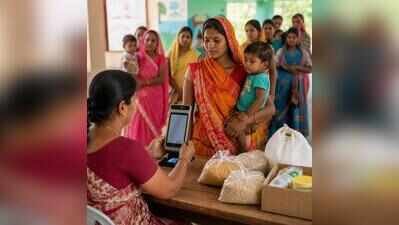
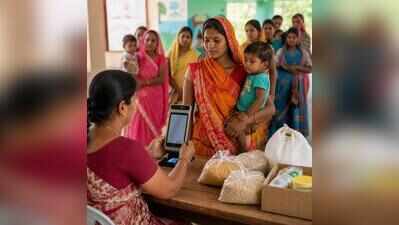
Jaipur: Rajasthan distributed 88% of its allotted take-home ration through the face recognition system (FRS) in Oct, according to state govt data as of Oct 24. Barmer recorded the lowest coverage at 75%, while Balotra topped the list at 95%.Introduced this year across the Anganwadi network, FRS uses Aadhaar-linked facial authentication to verify beneficiaries before distributing supplementary nutrition, aiming to curb fake and duplicate beneficiaries and diversion of ration.An Integrated Child Development Services (ICDS) official said poor internet connectivity in remote areas, particularly desert regions such as Barmer, remained a major challenge.“FRS-based ration distribution is expected to reach nearly 95% by Oct-end. We will address internet connectivity issues and technical glitches in the Poshan Tracker app to achieve 100% distribution,” said Vasudev Malawat, director, ICDS.The scheme provides monthly supplies of fortified food, including daliya, khichdi and Balahar premix, to pregnant and lactating women and children below six years. The supplies are aimed at addressing malnutrition and underweight among children.Of the 25 lakh registered beneficiaries in Rajasthan, around three lakh are yet to be covered under FRS for take-home ration distribution.Officials said outdated photographs on some beneficiaries’ Aadhaar cards made facial matching difficult. Changes in administrative boundaries following delimitation and the creation of new districts have also affected data mapping on the Poshan Tracker app.An ICDS official said the Centre would resolve these technical issues.Rajasthan’s FRS-based distribution was above the national average of 79.8%. Of the state’s 41 districts, three were in the ‘good’ category, while the remaining 38 were classified as ‘moderate’.