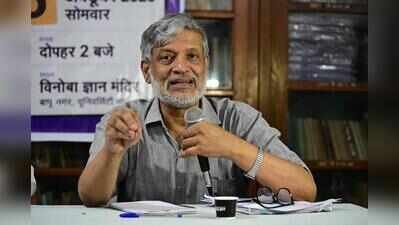
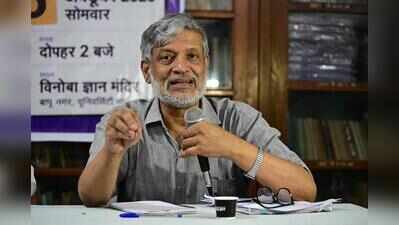
Anyone with an idea — however unconventional — about bringing change through local people and their knowledge could approach Bunker Roy. His response was often simple: “Do it, and I will support you. So what if some of them fail?”I saw this faith in people as one of the defining qualities of Bunker. He encouraged ideas, supported those willing to take risks and never allowed the fear of failure to become a reason for inaction.If I were to name someone who could inspire individuals, transform communities and influence countries without relying on money or the power of public office, Bunker would be among the most important examples of our generation.From 1970 until his death in 2026, he demonstrated that perseverance, faith in ordinary people’s wisdom and simplicity were not merely ideals. They could be practised and could produce lasting change.I first met Bunker Roy in 1983, when I was 20 and exploring the possibility of working in rural areas. I had a law degree but wanted to contribute beyond a conventional career. It was in Tilonia that I found my lifelong co-workers, Aruna Roy, Bunker’s wife, and Shankar.Bunker had an extraordinary ability to recognise people’s potential and encourage them to follow their convictions.I witnessed this during the Right to Information movement in 1997, when a group of MLAs from the then-ruling BJP alleged that Bunker’s organisation, Social Work and Research Centre (SWRC), was funding our movement. Govt ordered inquiries and put pressure on the organisation.Bunker’s response was remarkable. At a village panchayat in Bhuaro, he opened the organisation’s accounts and records of the previous 15 years to public scrutiny, inviting the MLAs to examine them. Among those present was the then Kishangarh MLA, Jagdeep Dhankhar, who later became Vice-President of India. It was a powerful demonstration of Bunker’s courage and commitment to transparency.The work that emerged from Tilonia and Barefoot College challenged conventional ideas of development. Bunker believed that rural people already possessed the knowledge and skills to solve their problems. They needed trust, opportunity and support. He brought together what he called the “cop-outs, wash-outs and drop-outs” of the conventional rat race and helped them recognise their own abilities.Three programmes from Tilonia illustrate this approach. The hand-pump mistry programme trained women to repair hand pumps, challenging expensive and male-dominated repair systems. The Shiksha Karmi programme trained local educated youth to teach in their own villages, recognising that their understanding of the community was as important as formal qualifications. The Solar Mama programme brought grandmothers from remote communities across the world to Tilonia, where they learnt to assemble and maintain solar systems before returning home to electrify their villages.But my understanding of Bunker goes far beyond these programmes.I saw how he put Tilonia on the world map and demonstrated the abilities of rural Rajasthanis. He believed that social workers must practise simplicity in their own lives if they wanted to bring meaningful social change.His support was never restricted to those who agreed with him. He could stand by people even when he differed with their methods. What mattered to him was the cause and the sincerity of the commitment.This was our experience while working with his extraordinary wife, Aruna Roy, who chose the path of activism. Bunker’s support for her and our work was invaluable. His belief in empowering marginalised people was unflinching.What I will remember most is his ability to make ordinary people believe that they could lead change themselves. He did not merely speak about his values. He lived them until his last breath.The writer is founder, Mazdoor Kisan Shakti Sangathan (MKSS)