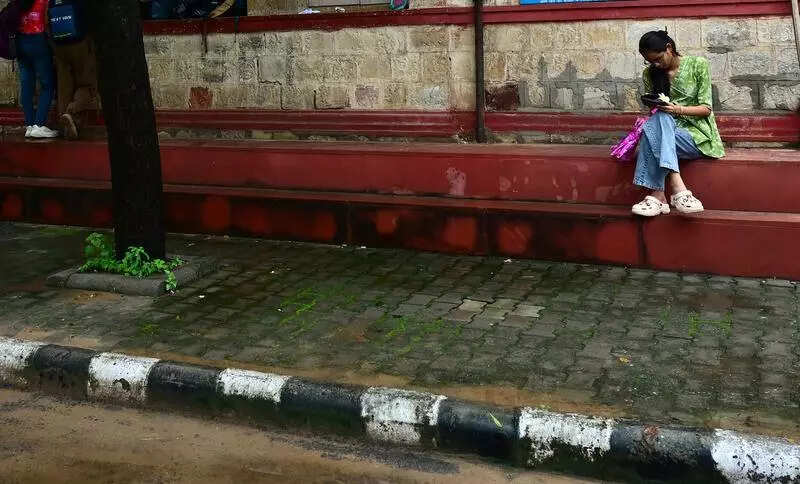
Jaipur: The urban local bodies department’s recent directives on pavement construction have put civic bodies under scrutiny for not adhering to Urban Development and Housing (UDH) department bylaws mandating the use of permeable tiles in urban areas.Despite clear guidelines that only permeable, also known as porous or pervious, tiles should be used for paving footpaths, most pavements across Jaipur remain covered with non-porous materials. “Most of the rainwater falling on roads and footpaths runs off through stormwater drains. There is no provision to percolate it into the ground to recharge our groundwater,” said city-based architect Pramod Jain.Jain stressed that permeable tiles should replace conventional hard surfaces. “Permeable tiles are designed to allow water to pass through them, either through the material itself or through gaps between individual tiles. This would allow rainwater to drain into the ground below, rather than running off into stormwater drains or causing puddles,” he said.He added that such tiles not only facilitate water percolation but also make pavements safer for pedestrians. “The civic bodies shall ensure all pavements in the cities of the state are paved with such tiles. The driveway through the gate of the buildings shall also have similar tiles, in a slope for swift movements of the vehicles,” he said.Officials claimed that some stretches have adopted these guidelines, citing pavements on both sides of the main gate of Rajasthan University on JLN Marg as examples. However, they admitted that most pavements, especially outside the Walled City, continue to be unsafe and poorly constructed.Highlighting the underlying issue, a Jaipur Municipal Corporation (JMC) Greater official, requesting anonymity, said, “The problem is that most building owners in Jaipur pave the surface of the pavements adjacent to their buildings either to allow their vehicles to get inside the compound or to park their vehicles. Although the law permits, the civic bodies never take any action against the residents because this system allows the civic bodies to save their budget on pavement construction.”
City’s pavements fail to meet UDH dept’s permeable tile needs | Jaipur News