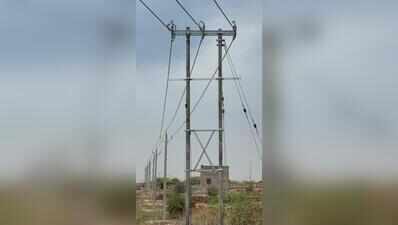
Jaipur: Keru Dumping Yard, fast emerging as western Rajasthan‘s leading winter refuge for migratory vultures and raptors after the globally renowned Jorbeer carcass dump, is set to become the state’s first bird-safe power zone. Jodhpur Vidyut Vitran Nigam Ltd (JVVNL) has begun retrofitting high-voltage electricity infrastructure around the site to reduce bird deaths caused by electrocution and collisions with overhead power lines. A first-of-its-kind initiative in Rajasthan, the project includes insulating hazardous conductors, redesigning power poles to bird-safe standards, and installing bird flight diverters and high-visibility markers on transmission lines.
The work covers the dumping yard and adjoining residential areas where electricity infrastructure overlaps with critical bird habitats. A senior JVVNL official said the modifications are aimed at protecting large soaring birds, which are particularly vulnerable to power infrastructure. Dau Lal Bohra, a member of Raptor Conservation Society, said Keru has emerged as a major winter-feeding ground for raptors after Jorbeer, one of the world’s most important vulture conservation sites. “Thousands of vultures, eagles and other birds of prey migrate every winter from Central Asia, Kazakhstan, Mongolia and Russia, attracted by abundant food resources,” Bohra said. The site regularly hosts globally threatened species, including the Egyptian Vulture, Eurasian Griffon, Cinereous Vulture, Steppe Eagle, Eastern Imperial Eagle and Long-legged Buzzard. He said large-bodied raptors face a high risk of electrocution because their wide wingspans can bridge live wires while perching, while overhead transmission lines are often difficult to detect in flight, especially during fog and strong winds. A wildlife expert associated with the project said Keru has become a key stopover along the Central Asian Flyway, with thousands of birds crossing transmission lines daily between feeding and roosting sites. “Making this network bird-friendly is a vital conservation measure that can significantly reduce bird mortality,” the expert said.