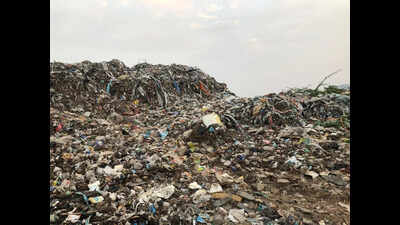
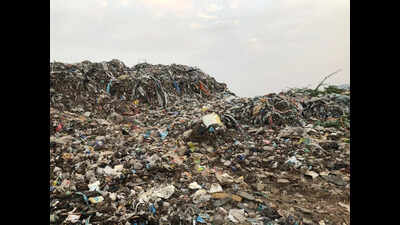
Jaipur: Leachate from plastic waste at Jaipur’s Mathuradaspura waste dumping yard is contaminating nearby agricultural soil and water with elevated levels of bisphenol A (BPA), threatening local crops, a Central University of Rajasthan study found.Researchers from the university’s department of environmental science recorded BPA concentrations up to 770.8 mg/L in soil samples near the landfill and up to 798.9 mg/L in nearby water bodies. Experts said the findings show that toxic chemicals from the landfill are infiltrating surrounding ecosystems.Researchers said that beneath the mountains of waste lies a “hidden environmental crisis” as, with every rainfall and changing season, buried plastic waste begins to break down, releasing harmful chemicals into the environment.Preksha Palsania, who conducted the research, said that to understand how such contamination affects life around the landfill, the team studied its impact on chickpea plants.“The results showed severe damage to plant growth and health. BPA exposure reduced seed germination, chlorophyll content, soluble proteins and enzymatic activity, all essential indicators of healthy plant development. At higher concentrations, these reductions reached nearly 70%-80%, showing how deeply BPA can interfere with normal plant functions and productivity,” said Palsania.The researchers examined the effects of PET microplastics (MPs), tiny plastic particles formed when plastic bottles and packaging materials gradually break apart in the environment. This study found that increasing concentrations of PET microplastics significantly affected plant growth and vitality.According to the research, seeds exposed to MPs exhibited poor germination, weak seedling growth, reduced plant size, lower dry weight and fewer leaves. Photosynthesis was also negatively affected by declining chlorophyll levels, and signs of stress were visible within plant cells.Garima Kaushik, associate professor at the department of environmental science at CURAJ, under whose guidance the research was conducted, said, “These findings suggest that the continuous accumulation of microplastics in agricultural soils may eventually reduce crop productivity and threaten food security in areas surrounding landfill sites.”“The Mathuradaspura Waste Dumping Yard has therefore become much more than a waste disposal site. It reflects the hidden journey of plastic pollution from everyday convenience to long-term contamination,” she added.Kaushik said that the research strongly emphasises the urgent need for stricter monitoring of landfill leachates, better regulation of single-use plastics, sustainable waste management practices and greater public awareness regarding plastic consumption and disposal.BOXCURAJ launches research scheme for PhD scholarsJaipur: The Central University of Rajasthan has announced the launch of the Vice-Chancellor CURAJ Research Promotion Scheme for PhD scholars from the academic session 2025 onwards. The scheme has been introduced for Non-NET fellowship research scholars with the objective of providing enhanced financial assistance and encouraging quality research at the university. Under the scheme, eligible research scholars will receive additional financial support of Rs 5,000 per month over and above the existing Non-NET fellowship. Further, an additional contingency grant of Rs 10,000 will also be provided to support research-related expenses. Prof Anand Bhalerao, Vice-Chancellor, Central University of Rajasthan, said, “The initiative has been introduced to attract meritorious students towards research and to further promote a strong culture of innovation, academic excellence and research within the university. We believe that investing in research scholars is an investment in the future of knowledge, innovation and nation-building.”